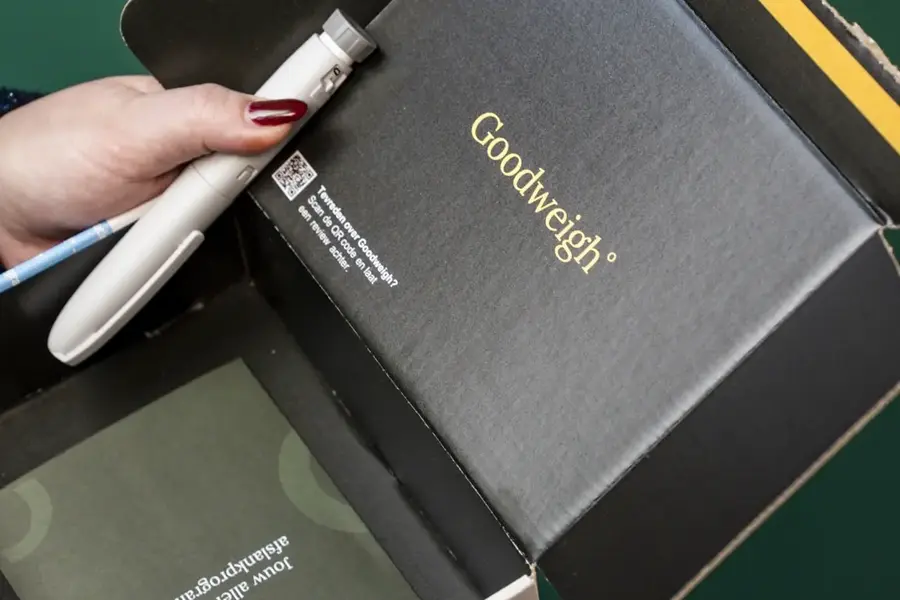
Ozempic, Wegovy, Mounjaro and alcohol: can they be taken together?

Short answer: Moderate alcohol consumption is not a problem for most people taking GLP-1 medication such as Ozempic, Wegovy, Mounjaro and Saxenda, but the combination may increase nausea and requires extra caution if you are taking other diabetes medication or have a history of pancreatitis.
Many users of GLP-1 medication find that they react differently to alcohol: they may have a reduced appetite, feel full more quickly, or, conversely, experience more side effects after just a few sips. This is no coincidence. GLP-1 medication such as Ozempic, Wegovy, Mounjaro and Saxenda acts on the same systems that determine how your body processes alcohol.
In this blog, we discuss what is known about the combination of GLP-1 medication and alcohol, and what you need to be aware of. We cover semaglutide (Ozempic, Wegovy, Rybelsus), tirzepatide (Mounjaro, Zepbound) and liraglutide (Saxenda) separately where relevant.
How do GLP-1 medications affect your alcohol tolerance?
GLP-1 medications slow down the rate at which the stomach empties (gastric emptying) and increase the feeling of fullness, and this effect is not limited to solid food. Because the stomach empties more slowly, alcohol also reaches the small intestine more gradually, where it is absorbed into the bloodstream. In theory, this slows down the rate at which blood alcohol levels rise, but it can also mean that alcohol remains in the stomach for longer, stimulating it before it is absorbed.
When taken on an empty stomach, the effect is less predictable: some users actually report that alcohol has a stronger effect. This mechanism – how GLP-1 medication slows gastric emptying – underlies both the feeling of fullness and this altered response to alcohol. Controlled research into the exact impact on the blood alcohol curve in humans is still lacking, so caution is advised.
Do GLP-1 medications reduce the craving for alcohol?
There is a growing body of scientific research into whether GLP-1 agonists can reduce the craving for alcohol. A review of GLP-1 receptor agonists as a potential treatment for alcohol use disorder shows that this medication affects the brain’s reward system, in a similar way to its dampening effect on food cravings. This may occur via the dopamine pathway, which also plays a role in addictive behaviour. A recent systematic review of GLP-1 receptor agonists and alcohol use disorder confirms that the initial results are promising, although the number of large-scale clinical trials in humans remains limited.
Other research into the role of GLP-1 in addiction susceptibility confirms that the effect extends beyond eating behaviour alone. Important: this is experimental research. GLP-1 medication is not approved in the Netherlands as a treatment for alcohol addiction, and craving reduction should never be used to justify excessive alcohol consumption.
What are the risks of drinking alcohol whilst on GLP-1 treatment?
The greatest practical risk is an exacerbation of existing GLP-1 side effects. Alcohol irritates the stomach lining, and because the medication already slows down gastric emptying, the combination may exacerbate nausea, vomiting and other gastrointestinal symptoms. This is consistent with the common side effects of GLP-1 medication, which already occur in some users even without alcohol. Furthermore, vomiting caused by alcohol, combined with reduced fluid intake, can lead to dehydration more quickly than in users who do not take GLP-1 medication.
For people with type 2 diabetes who, in addition to semaglutide or tirzepatide, also use insulin or a sulphonylurea, there is an increased risk of hypoglycaemia (low blood sugar): alcohol can inhibit the liver’s production of glucose, which enhances the effect of blood-sugar-lowering medication. In practice, this is a well-known point of concern for this group, even though the patient information leaflet does not explicitly mention alcohol as a risk factor.
Does this vary depending on the medication (Ozempic, Wegovy, Mounjaro, Saxenda)?
Semaglutide (Ozempic, Wegovy, Rybelsus), tirzepatide (Mounjaro, Zepbound) and liraglutide (Saxenda) work on the same basic principle. They mimic a hormone produced naturally by the body that is released after eating. As a result, they help to control blood sugar levels, suppress appetite and ensure that the stomach empties more slowly. Tirzepatide also acts on an additional mechanism, which may enhance the effect on your feeling of fullness and, possibly, on your craving for alcohol. The practical difference lies mainly in how long they remain active in your body. Semaglutide and tirzepatide last for about a week, whilst liraglutide lasts only about half a day. That is why you inject Saxenda daily, whilst injections of the other two are only needed once a week.
None of the official package leaflet texts in the Pharmacotherapeutic Compass explicitly mention alcohol as an interaction or contraindication. The advice in this blog is therefore general guidance on the basis of the mechanism of action, not an official package leaflet warning. If you’d like to see the options side by side, we’ve set out a comparison of Ozempic, Wegovy, Mounjaro and Saxenda.
How much alcohol is safe to consume during GLP-1 treatment?
For most users not taking other diabetes medication, there is no strict contraindication to moderate alcohol consumption. The general advice is to follow the Dutch guidelines: a maximum of one glass per day, preferably with several alcohol-free days per week. According to the Pharmacotherapeutic Compass, this advice on moderation applies to the general population in any case, regardless of GLP-1 use.
There is no reason to assume that users of Wegovy, Mounjaro or Saxenda need to deviate from this advice on a regular basis. However, extra caution is advisable if you are already experiencing nausea, vomiting or bloating as a result of the medication: alcohol may further exacerbate these symptoms.
When should alcohol be avoided whilst using GLP-1?
Caution regarding alcohol is particularly important if you have a history of pancreatitis. Acute pancreatitis is a rare but serious potential side effect of semaglutide, tirzepatide and liraglutide, and a previous history of pancreatitis is considered a relative contraindication for all three. Regardless of this, alcohol is a recognised risk factor for pancreatitis, and when two independent risk factors coincide, the combined risk increases.
Restraint with alcohol is also advisable in the case of existing liver problems, given that alcohol is metabolised via the liver. If, in addition to semaglutide or tirzepatide, you are also using insulin or a sulphonylurea for type 2 diabetes, it is wise to limit your alcohol intake and keep a close eye on your blood sugar levels due to the increased risk of hypoglycaemia. If you are unsure whether your situation falls into one of these categories, discuss this with your doctor or healthcare professional before drinking alcohol.
Alcohol and GLP-1 medication: in moderation and with care
Moderate alcohol consumption is not a problem for most GLP-1 users, but it requires attention to side effects and specific risk groups, such as people taking other diabetes medication or those with a history of pancreatitis. Goodweigh discusses this as standard during the initial assessment and throughout the coaching programme, so that you know what to look out for in your specific situation.
Referenties
- Jerlhag, E. (2025). GLP-1 receptor agonists: Promising therapeutic targets for alcohol use disorder. Endocrinology. https://pubmed.ncbi.nlm.nih.gov/39980336/
- Patel, S. (2025). GLP-1 receptor agonists and alcohol use disorder: A systematic review. Alcohol and Alcoholism. https://pubmed.ncbi.nlm.nih.gov/41273789/
- Klausen, M. K. (2025). Effects of GLP-1 receptor agonists in alcohol use disorder. Basic & Clinical Pharmacology & Toxicology. https://pubmed.ncbi.nlm.nih.gov/39891507/
- Klausen, M. K. (2022). The role of glucagon-like peptide 1 (GLP-1) in addictive disorders. British Journal of Pharmacology. https://pubmed.ncbi.nlm.nih.gov/34532853/
- Bruns, V. N. (2024). IUPHAR review: Glucagon-like peptide-1 (GLP-1) and substance use disorders. Pharmacological Research. https://pubmed.ncbi.nlm.nih.gov/39032839/
- Farmacotherapeutisch Kompas. Semaglutide. https://www.farmacotherapeutischkompas.nl/bladeren/preparaatteksten/s/semaglutide
- Farmacotherapeutisch Kompas. Tirzepatide. https://www.farmacotherapeutischkompas.nl/bladeren/preparaatteksten/t/tirzepatide
- Farmacotherapeutisch Kompas. Liraglutide. https://www.farmacotherapeutischkompas.nl/bladeren/preparaatteksten/l/liraglutide
Frequently Asked Questions
For most users not taking diabetes medication, one glass of alcohol per day is generally not a problem. Be mindful of any signs of nausea or stomach discomfort, and ensure you include enough alcohol-free days.
It is possible, as delayed gastric emptying can affect how alcohol is absorbed into the bloodstream. There is no research that has measured this precisely in humans, so please be cautious with your alcohol intake.
For most users, moderate alcohol consumption is safe, but please exercise extra caution if you have a history of pancreatitis, liver problems, or if you use insulin or sulfonylureas.
Research suggests that GLP-1 medication may reduce alcohol cravings by affecting the brain's reward system. This is experimental and not an approved indication in the Netherlands.
Yes, alcohol can worsen nausea, vomiting, and gastrointestinal issues that may already be caused by your medication. If you are currently experiencing these symptoms, it is advisable to limit your alcohol intake for the time being.