GLP-1 side effects: what can you expect with Ozempic, Wegovy, Saxenda and Mounjaro?

Short answer: The side effects of GLP-1 treatments – Ozempic, Wegovy, Saxenda and Mounjaro – are largely the same: nausea, diarrhoea and constipation, particularly when the dose is being increased. Serious side effects such as pancreatitis are rare but require you to contact your doctor immediately.
Ozempic, Wegovy, Saxenda and Mounjaro all work via the same or a similar hormonal mechanism, and therefore share largely the same side effects. Anyone still deciding between these medicines often wonders exactly what GLP-1 side effects entail and whether one medicine is milder than another. This article provides an overview of what you can expect at a class level, where the medicines differ from one another, and when a side effect is a reason to contact your doctor.
Why do GLP-1 medicines cause similar side effects?
All GLP-1 medicines act on the same hormonal system, which explains why the side effects are very similar. Semaglutide and liraglutide mimic a hormone produced naturally by the body: GLP-1. This hormone ensures that the pancreas releases insulin when blood sugar levels rise, inhibits a counter-hormone that actually raises blood sugar, slows down the rate at which the stomach empties, and suppresses the feeling of hunger in the brain. Together, this results in more stable blood sugar levels and reduced appetite.
As GLP-1 receptors are also found in the gastrointestinal tract and the brainstem, the well-known side effects arise from this very same mechanism. According to research into the efficacy and safety of GLP-1 medication, this is an expected effect of how these medicines work, not a sign that something is going wrong.
What are the most common side effects of GLP-1 medication?
The most common side effects of GLP-1 medication are gastrointestinal symptoms, and these apply equally to semaglutide, liraglutide and tirzepatide. Nausea is the most commonly reported side effect and occurs particularly when starting treatment or increasing the dose. In addition, diarrhoea, vomiting, constipation, abdominal pain and a reduced appetite occur regularly. A network meta-analysis published in the BMJ shows that these gastrointestinal symptoms are a class-wide effect of GLP-1 receptor agonists, regardless of which specific drug is used.
For most users, these symptoms subside as the body gets used to the higher dose. If you’d like to know what this looks like in practice for a specific medication, read more about the side effects of Ozempic in detail. Diet also plays a role: what’s best to eat whilst taking GLP-1 medication can help alleviate nausea and stomach complaints.
What serious side effects should you be aware of with GLP-1 medication?
Serious side effects of GLP-1 medication are rare, but do require vigilance. Acute pancreatitis, an inflammation of the pancreas, is a rare but serious side effect that can occur with all three medicines. Persistent vomiting or diarrhoea can also lead to dehydration and, in the worst-case scenario, acute kidney failure. Gallstones and inflammation of the gallbladder (cholecystitis) are also recognised as shared risks within this class of medication.
In addition, each medicine has its own specific considerations. With Wegovy (semaglutide), a very rare eye condition (NAION) has been reported, in which the optic nerve is damaged. This occurs in approximately 1 in 10,000 people per year. A severe allergic reaction may also occur. And anyone combining the medicine with insulin or certain diabetes medicines (SU derivatives) is at greater risk of low blood sugar. With Saxenda (liraglutide), the skin at the injection site may harden or thicken (cutaneous amyloidosis). This mainly occurs if you always inject in exactly the same place. Changing the injection site helps to prevent this. With Mounjaro (tirzepatide), a slight increase in heart rate has been reported, of approximately 3 to 5 beats per minute. According to the Pharmacotherapeutic Compass, these symptoms should always be reported to the treating doctor, even if they are rare.
What are the differences between the GLP-1 medicines?
The medicines are very similar, but differ in a few respects.
Tirzepatide (Mounjaro) is the only one that acts on two hormones simultaneously (GIP and GLP-1). In a study comparing it directly with semaglutide, a slightly different side-effect profile emerged, including a slight increase in heart rate. Otherwise, the safety profile is largely similar to that of the other medicines. Liraglutide (Saxenda) requires a daily injection, whilst semaglutide (Wegovy) is only needed once a week. This is because liraglutide is cleared from the body more quickly. It is also the only medicine that may cause skin hardening at the injection site. With semaglutide, hair loss has been observed slightly more frequently (around 2.5%). Would you like to compare the medicines in more detail in terms of weight loss, dosage and effectiveness? Then read Ozempic, Wegovy, Mounjaro and Saxenda compared.
When should you contact your doctor whilst taking GLP-1 medication?
Contact your doctor immediately if you experience severe, persistent abdominal pain, as this may indicate pancreatitis. Signs of dehydration, such as dizziness, a dry mouth or very little urine output, are also reasons not to delay. Sudden changes in your vision, signs of a severe allergic reaction such as swollen lips or breathing difficulties, and symptoms that seriously impair your daily functioning should all be reported to your GP or your care provider. This list is not exhaustive: if in doubt, getting in touch is always the right choice.
How does Goodweigh help manage the side effects of GLP-1 medication?
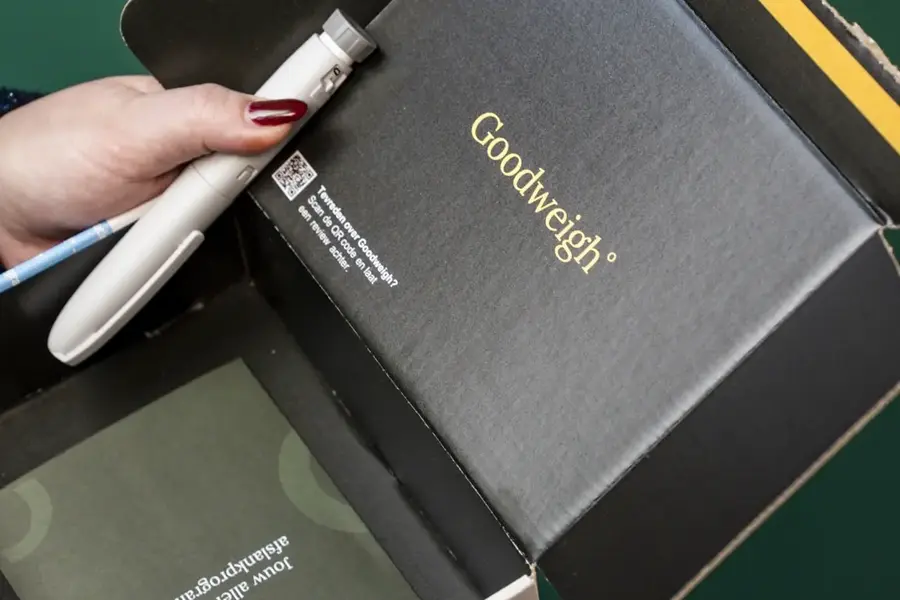
At Goodweigh, you receive ongoing medical support whilst your dosage is being gradually increased. This support is specifically designed to minimise side effects and, should they occur, to identify them promptly and adjust your treatment in consultation with your healthcare provider.
This means you don’t have to decide for yourself whether a symptom is normal or a sign that the dose needs adjusting. Want to know more about what this support involves? Take a look at the Goodweigh weight-loss programme.
Side effects of GLP-1 medication are predictable and usually temporary
Most side effects of GLP-1 medication are a direct result of the same mechanism of action that enables weight loss. They generally subside as the body adjusts, usually within the first few weeks to months after starting treatment or increasing the dose. With medical support from Goodweigh, these side effects are monitored and adjusted where necessary, so that you can work safely towards your goal.
Referenties
- Yao, H., Zhang, X., Zou, D., Xu, R., Wang, F., Yu, T., & Zhu, H. (2024). Comparative effectiveness and safety of GLP-1 receptor agonists in patients with overweight or obesity: a network meta-analysis. BMJ, 384, e076410. https://pubmed.ncbi.nlm.nih.gov/38286487/
- Drucker, D. J. (2024). Efficacy and safety of GLP-1 medicines for type 2 diabetes and obesity. Diabetes Care, 47(11), 1873–1888. https://pubmed.ncbi.nlm.nih.gov/38843460/
- Frías, J. P., Davies, M. J., Rosenstock, J., et al. (2021). Tirzepatide versus semaglutide once weekly in patients with type 2 diabetes. New England Journal of Medicine, 385(6), 503–515. https://pubmed.ncbi.nlm.nih.gov/34170647/
- Liu, Y., et al. (2025). The clinical application of GLP-1RAs and GLP-1/GIP dual receptor agonists: efficacy and safety considerations. Drug Design, Development and Therapy, 19, 10383–10409. https://pubmed.ncbi.nlm.nih.gov/41312047/
- Farmacotherapeutisch Kompas. Semaglutide. https://www.farmacotherapeutischkompas.nl/bladeren/preparaatteksten/s/semaglutide
- Farmacotherapeutisch Kompas. Tirzepatide. https://www.farmacotherapeutischkompas.nl/bladeren/preparaatteksten/t/tirzepatide
- Farmacotherapeutisch Kompas. Liraglutide. https://www.farmacotherapeutischkompas.nl/bladeren/preparaatteksten/l/liraglutide
Frequently Asked Questions
No, Ozempic and Wegovy both contain semaglutide and therefore share the same side effect profile, with nausea being the most commonly reported complaint. The difference lies in the approved indication and dosage, not in the type of side effect.
For most users, side effects such as nausea and stomach discomfort subside as the body adjusts to the dosage, typically within a few weeks to months of starting or increasing the dose. This varies from person to person.
Persistent vomiting or diarrhea can lead to dehydration and, in rare cases, acute kidney failure. Please contact your doctor if symptoms persist, especially if you notice that you are urinating less frequently or feeling dizzy.
Switching between GLP-1 medications should always be done in consultation with your attending physician, who will first assess whether your symptoms are related to the medication or the dosage. Therefore, always discuss this with your healthcare provider before making any changes yourself.
Goodweigh provides ongoing medical supervision as part of the treatment program, focused on minimizing side effects and identifying them in a timely manner. For the latest information about the program, please visit the Goodweigh website.