

Calculate your daily protein requirements
Enter your details to see exactly how many grams of protein you need per day.


See if weight loss treatments via Goodweigh might be right for you.

How much protein a day is normal?
Your protein requirements do not, therefore, depend on a single fixed number, but on your body weight, your activity level and your goal. That is why the calculator asks for this information.
Nutrition guidelines recommend that healthy adults consume approximately 0.8 grams of protein per kilogram of body weight per day[1]. The European Food Safety Authority (EFSA) also uses this reference value[2]. This is sufficient to prevent deficiencies, but is not necessarily optimal. Goodweigh's medical working method generally recommends aiming for approximately 1 gram of protein per kilogram of body weight per day, combined with regular strength training, to protect your muscle mass effectively. For individuals who engage in regular physical activity or strength training, 1.2 to 1.6 grams per kilogram supports muscle mass maintenance and recovery. During a calorie deficit, higher protein intakes (such as 1.2 to 1.6 g/kg) help preserve lean muscle mass and enhance satiety[7]. For someone weighing 80 kg, 1 gram per kilogram is about 80 grams of protein per day, and 1.2 to 1.6 grams per kilogram is 96 to 128 grams. Prolonged protein intakes at or above 2.0 g/kg per day should be avoided due to potential adverse health effects.
Why protein is important for weight loss
Anyone trying to lose weight wants to lose fat, not muscle mass. It is precisely when you are in a calorie deficit that a higher protein intake helps to preserve muscle whilst you burn fat. What’s more, protein keeps you feeling fuller for longer than carbohydrates or fat, so you’re less likely to get hungry. Protein is therefore a useful aid to weight loss, although the long-term effect depends mainly on whether you stick to a high-protein diet[7]. If you use weight medication, getting enough protein is particularly important: with rapid weight loss, some of the weight lost comes at the expense of your muscle mass, and sufficient protein and strength training help to preserve it.

A round-up of the best sources of protein
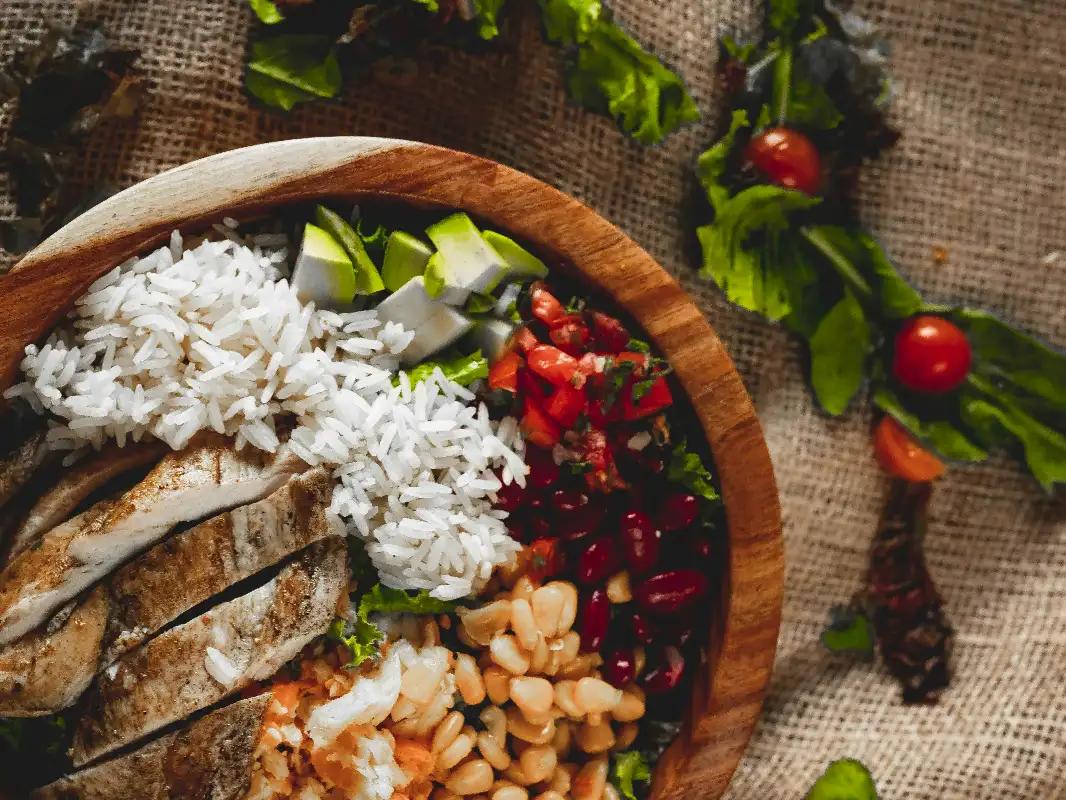
You can easily meet your protein requirements through a normal diet. Some protein-rich options include: chicken breast (± 31 g per 100 g), low-fat quark (± 10 g per 100 g), eggs (approx. 6 g per egg), Greek yoghurt, lean fish, pulses such as lentils and chickpeas, tofu and tempeh, nuts, and possibly a protein shake (whey or plant-based). Spread your protein intake throughout the day for the best effect on muscle maintenance.
Please note: While this calculator provides a helpful starting estimate, Goodweigh's medical working method generally recommends aiming for approximately 1 gram of protein per kilogram of body weight per day, combined with regular strength training, to protect your muscle mass effectively. If you are overweight, calculating protein based on your total body weight may suggest a higher protein intake than you actually need. Furthermore, if you have reduced kidney function or risk factors such as type 2 diabetes or high blood pressure, always consult your physician before adopting a high-protein target. Always discuss what is appropriate for your situation with your lifestyle coach or doctor.

Frequently asked questions about protein requirements
Can't find your question here? Please get in touch using the button below.
For healthy adults who do not exercise, the recommended amount is approximately 0.8 grams of protein per kilogram of body weight. Goodweigh's medical working method generally recommends aiming for approximately 1 gram of protein per kilogram of body weight per day, combined with regular strength training. If you engage in regular physical activity or strength training, 1.2 to 1.6 grams per kilogram supports muscle mass maintenance and recovery. For someone weighing 70 kg, this amounts to roughly 70 grams of protein per day, or 84 to 112 grams with regular exercise. Prolonged protein intakes at or above 2.0 g/kg per day should be avoided. The calculator at the top of this page gives an estimate; its result may be higher than this advice.
Yes. A higher protein intake makes you feel fuller, so you don’t get hungry as quickly, and helps preserve your muscle mass whilst you’re in a calorie deficit. This means you lose proportionally more fat and less muscle[7]. The body also uses slightly more energy to digest protein than it does to digest fat or carbohydrates.
For healthy adults, an intake of up to twice the recommended amount, around 1.7 grams per kilogram of body weight, is considered safe[8]. Very high intakes offer no additional benefit and are, above all, unnecessary. Prolonged protein intakes at or above 2.0 g/kg per day should be avoided due to potential adverse health effects. Higher protein targets are not suitable for individuals with reduced kidney function: if you have reduced kidney function, a protein restriction may be medically necessary rather than an increase. If you have a kidney or liver condition, or risk factors such as type 2 diabetes or high blood pressure, always consult your doctor or dietitian before following a calculator result that advises a high protein intake (above 1.0 to 1.2 g/kg). Always consult your treating physician or lifestyle coach before significantly altering your protein intake.
Animal sources such as chicken, fish, eggs, low-fat quark and Greek yoghurt contain all the essential amino acids. Good plant-based sources include pulses (lentils, chickpeas, beans), tofu, tempeh, nuts and seeds. A combination of plant-based sources provides a complete amino acid profile.
Sports nutrition researchers advise approximately 1.6 to 2.2 grams of protein per kilogram of body weight per day for muscle building, combined with strength training and sufficient calorie intake[5]. Prolonged protein intakes at or above 2.0 g/kg per day should be avoided due to potential adverse health effects. For individuals who engage in regular physical activity or strength training, 1.2 to 1.6 g/kg is recommended.. In a large meta-analysis, consuming more than approximately 1.6 g/kg did not, on average, result in any additional muscle growth[4]
Yes, that works best. For muscle building, sports nutrition experts recommend roughly 20 to 40 grams of protein per meal, spread throughout the day[3]. You should therefore spread your protein intake over 3 to 4 meals rather than eating it all in one go.
No, protein shakes aren’t essential. They’re particularly useful if you’re finding it difficult to meet your goals through your regular diet alone, for example if you have high nutritional needs or a poor appetite. A shake is a supplement, not a substitute for a varied diet.
Possibly. From around the age of 65, muscle mass is lost more rapidly (sarcopenia). An international group of experts therefore recommends that older people consume 1.0 to 1.2 grams per kilogram or more, in order to maintain muscle strength and independence[6]. From the age of 65, the calculator adds 0.1 g/kg.. Other nutrition guidelines see no convincing evidence that all older people need more, but do not rule out the possibility that frail or malnourished older people may benefit from it[1]
Certainly. With rapid weight loss, for example when using weight medication, there is a risk that you will lose muscle mass as well as fat. Getting enough protein and doing strength training can help to limit that muscle loss. If you choose Yes in the calculator when asked about weight medication, the calculator uses a factor of at least 1.7 g/kg. Goodweigh's medical working method generally recommends aiming for approximately 1 gram of protein per kilogram of body weight per day, combined with regular strength training, to protect your muscle mass effectively. Always discuss your diet with your doctor when undergoing medical treatment.
No. The calculator provides an estimate based on general guidelines and is not a substitute for personal advice from a doctor or dietitian. If you have any health concerns, are pregnant or are taking medication, please consult a healthcare professional.

Werken aan een gezond gewicht?
Water is een goede eerste stap. Wil je meer? Ontdek of een medisch begeleid afvaltraject bij jou past.