



Progesterone
Using estradiol and still have a uterus? Progesterone keeps your treatment safe. And as a bonus, many women sleep better on it.


Only available with a valid prescription
Progesterone is a hormone your ovaries produce after ovulation. During menopause you make less and less of it. You often notice this already in perimenopause, for example through restless sleep or an irregular cycle.
Estrogen (estradiol) makes your uterine lining grow. Progesterone keeps that in check. That's why estradiol almost always comes with progesterone, as long as you still have a uterus.
- Protection: keeps your uterine lining healthy during treatment with estradiol.
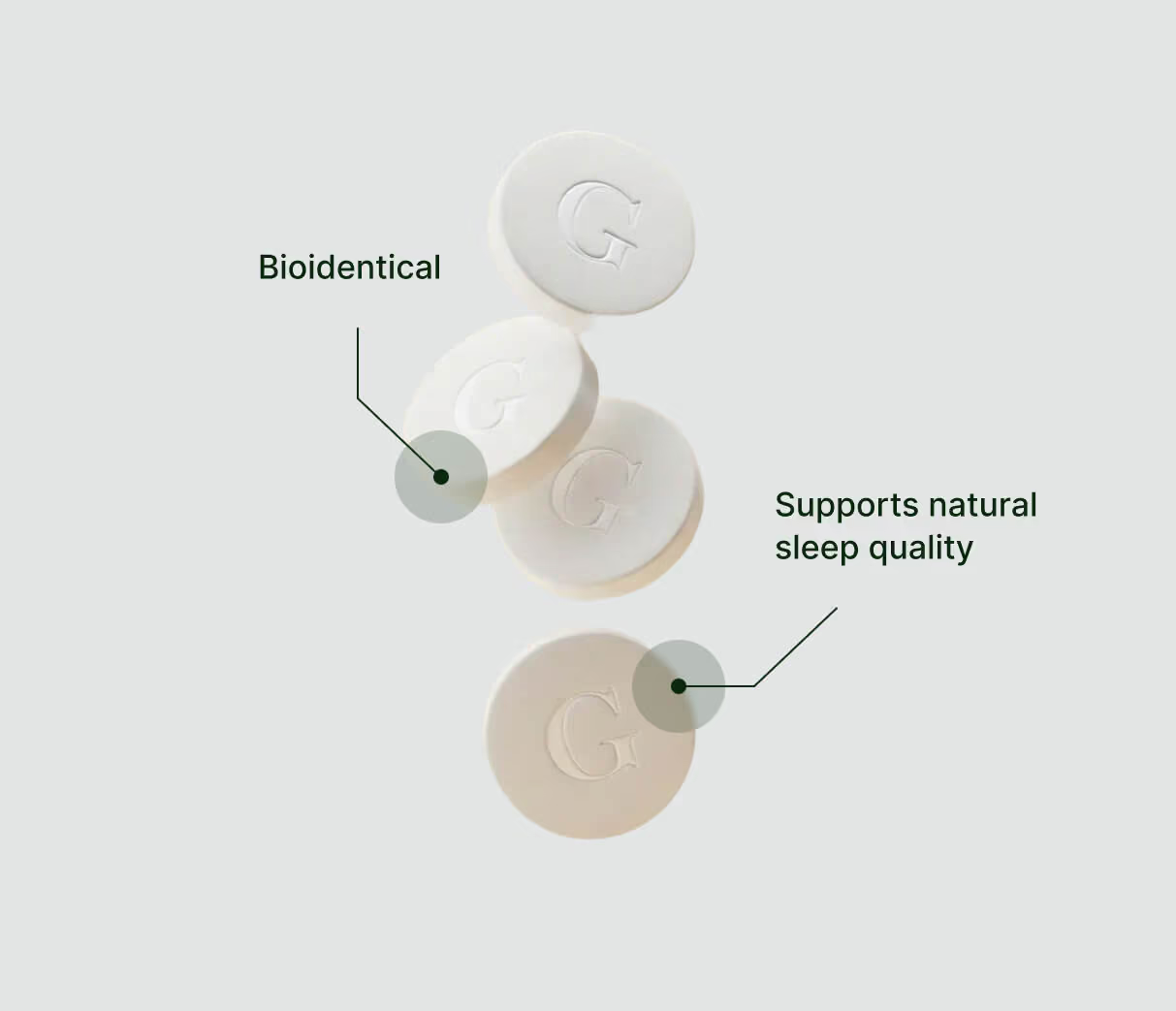
- Better sleep: progesterone has a mild calming effect, which is why you usually take it before bed.
- Bioidentical: chemically identical to the progesterone your body makes itself.
You usually take progesterone as a capsule in the evening, before bed. Your doctor chooses a schedule with you: every day, or part of the month (in which case you often get a monthly bleed). No longer have a uterus? Then you usually don't need progesterone.
- Possible side effects: drowsiness or dizziness (hence the evening dose), tender breasts, some spotting in the first months.
- Not suitable if you have (had) breast cancer, serious liver disease or unexplained vaginal bleeding, among other things. Your doctor checks this during the intake.
- Always read the patient leaflet. Questions? Chat with our medical team.
How it works, in 4 simple steps
Tell us about yourself
Answer a few simple questions about your medical situation. We use this information to create a personalized treatment plan for you.

Get your treatment plan
Receive a personalized treatment plan and get in touch with our medical team.

Start your treatment
We deliver your treatment to your home for free in discreet packaging.



Ongoing support
Chat with our coaches, track your progress, and receive content for lasting results.
Feel like yourself again
After a few weeks, you will notice that you slowly start to feel like yourself again and your symptoms begin to fade.

What our customers say


Expert guidance for every journey
Our team is always here for you throughout your journey. We guide you toward the best possible results.


Frequently asked questions
Can't find your question here? Please get in touch using the button below.
To protect your uterine lining.
Usually not; your doctor will discuss this with you.
Some women feel drowsy, which is why you take it before bed.
Often yes on a schedule with a break; usually not with daily use, after the first few months.
That depends on your symptoms; your doctor advises you during the intake.
Most menopause medication is covered by basic health insurance, but first comes out of your deductible.

Take control of your menopause
Goodweigh helps women through menopause with personalized treatments and advice. Online, whenever it suits you.