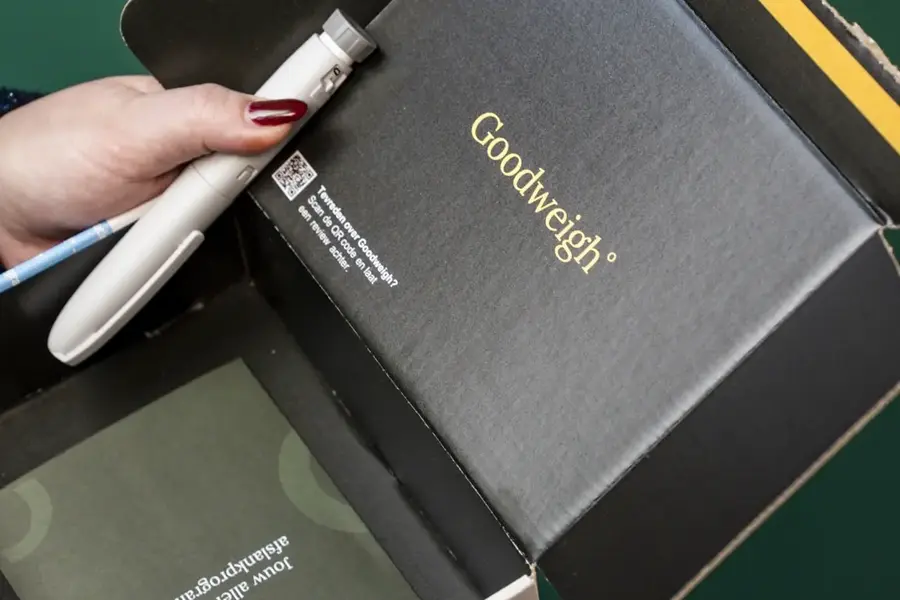
Ozempic and pregnancy: what you need to know | Goodweigh
Does Ozempic affect pregnancy?
What if you are using Ozempic and are pregnant, planning to become pregnant, or become pregnant unintentionally? In this blog, you can read about what using semaglutide means during and around pregnancy, what you should do immediately if you become pregnant, and what measures are needed to prevent an unintended pregnancy whilst on treatment.
Can you use Ozempic during pregnancy?
No. Ozempic is not recommended during pregnancy, whether used for type 2 diabetes or for weight loss. Specific clinical trials in pregnant women have not been conducted, as it is not ethically justifiable to test medication in this way. Data in humans is therefore limited.
What is known comes from observational studies of women who were unintentionally exposed. A Danish cohort study of 32 pregnancies with semaglutide exposure in the first trimester found no increased risk of congenital abnormalities compared to pregnancies without exposure. An international cohort study involving multiple GLP-1 agonists confirmed this finding. However, the studies are small, and the lack of evidence means that caution is still advised. Furthermore, weight loss during pregnancy is medically undesirable, which in itself is reason enough to stop taking Ozempic.
What should you do if you become pregnant whilst using the medication?
Stop taking Ozempic immediately as soon as you know you are pregnant. Do not take any further injections and contact your doctor as soon as possible. Treatment is discontinued in all cases once pregnancy is confirmed. Your doctor will assess the situation and provide further guidance throughout your pregnancy.
If you are accidentally exposed during early pregnancy, do not worry unnecessarily. As described above, the available observational studies to date do not show an increased risk of congenital abnormalities. The prescribing information does, however, advise that you always seek medical advice if exposed during pregnancy, so that the situation can be closely monitored.
How far in advance should you stop taking it if you are planning to conceive?
At least two months before planned conception. Semaglutide has a half-life of approximately one week, which means the substance remains active in the body for weeks after the last injection. The manufacturer stipulates that women should stop taking Ozempic at least two months before a planned pregnancy, so that the substance has been completely cleared from the body before conception takes place. In practice, doctors often advise allowing a slightly longer period. Always discuss the right timing with your doctor.
How can you prevent an unintended pregnancy whilst using the medication?
If you are using Ozempic and do not wish to become pregnant, it is advisable to ensure you have reliable contraception. There are two reasons why the risk of an unintended pregnancy during treatment may be higher than expected.
Firstly, semaglutide can restore ovulation in women who are overweight or have PCOS. Research shows that weight loss and improved insulin sensitivity can indirectly increase fertility. Women who ovulated irregularly or not at all before treatment may therefore start to do so whilst using the medication, without being aware of it.
Secondly, side effects such as vomiting and diarrhoea, which can occur particularly during the initial phase of Ozempic treatment, may temporarily disrupt the absorption of oral contraceptive pills. Clinical studies show no significant interaction between semaglutide and the blood levels of oral contraceptives, but in the event of persistent vomiting or diarrhoea, the same rule of thumb applies as with any gastrointestinal condition: the reliability of the pill may then be temporarily reduced.
Non-oral contraceptive methods, such as condoms, a hormonal IUD, copper IUD, implant or contraceptive injection, are the most reliable choice during treatment, as they do not depend on gastrointestinal absorption. It is advisable to discuss this with your doctor.
Does Ozempic affect fertility?
There is no direct evidence that semaglutide has a positive or negative effect on fertility in humans. The indirect effect via weight loss and improved insulin sensitivity has, however, been documented: in women with PCOS or obesity, ovulation may resume as weight decreases. This is a desirable effect if you wish to become pregnant, but requires effective contraception if that is not the intention.
Can you use Ozempic whilst breastfeeding?
Use of Ozempic whilst breastfeeding is not recommended. No data is available on the presence of semaglutide in human breast milk, its effect on the infant or its effect on milk production. Due to the lack of research, the manufacturer advises avoiding use whilst you are breastfeeding. Discuss this with your doctor after giving birth.
Summary: the guidelines are clear
Do not use Ozempic during pregnancy. Stop immediately if you become pregnant and do not take another injection. Contact your doctor as soon as possible. Stop at least two months before planned conception. Use reliable, preferably non-oral, contraception during treatment. Do not use Ozempic whilst breastfeeding.
Do you have questions about your situation? Contact Goodweigh or discuss this with your own doctor.
Referenties
- Novo Nordisk. (2023). Ozempic (semaglutide) injection: Prescribing information. U.S. Food & Drug Administration. https://www.accessdata.fda.gov/drugsatfda_docs/label/2023/209637s020s021lbl.pdf
- Pratt, E. M., et al. (2025). Pregnancy outcomes following first trimester exposure to semaglutide. Therapeutic Advances in Endocrinology and Metabolism, 16. https://pmc.ncbi.nlm.nih.gov/articles/PMC12141256/
- Lepercq, J., et al. (2024). Use of GLP1 receptor agonists in early pregnancy and reproductive safety. BMJ Open, 14(4), e079414. https://pmc.ncbi.nlm.nih.gov/articles/PMC11043712/
- Andersen, E. S., et al. (2025). Pregnancy outcomes after semaglutide exposure. Diabetes, Obesity and Metabolism, 27(3). https://pmc.ncbi.nlm.nih.gov/articles/PMC11906903/
- Moores, K. G., et al. (2023). Pharmacologic Treatment of Obesity in Reproductive Aged Women. Obstetrics & Gynecology, 141(5). https://pmc.ncbi.nlm.nih.gov/articles/PMC10328448/